


e.l.f. Beauty, N.C. A&T to Co-Host Inaugural Change the Board Game Student Leadership Symposium
11/18/2026 in College of Business and Economics, College of Health and Human Sciences
By Michaela Ratliff / 11/19/2026 Research, College of Engineering, Chemical, Biological, and Bio Engineering
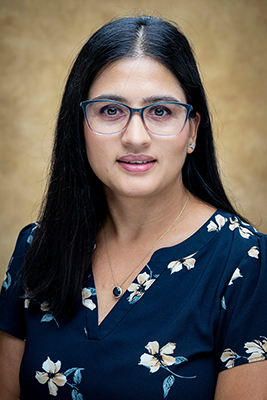
EAST GREENSBORO, N.C. (Nov. 19, 2026) — North Carolina Agricultural and Technical State University assistant bioengineering professor Muna Aryal, Ph.D., has received $410,351 in R21 funding from the National Institutes of Health’s (NIH) National Institute on Aging to advance brain health research through the use of noninvasive ultrasound technology.
 Degenerative brain diseases are a growing public health crisis, affecting more than 6 million older Americans, with projections to double by 2050. The disease not only imposes a significant economic burden, with healthcare costs expected to exceed $1 trillion, but it also affects people as young as their 30s to 50s, underscoring the need for effective treatments.
Aryal’s research aims to develop a noninvasive, low-intensity ultrasound technique that integrates multimodal approaches, including mathematical and rodent models, to enhance the brain’s glymphatic system and support its natural waste-clearance processes.
“The glymphatic system, which is responsible for clearing waste products such as amyloid beta from the brain, plays a crucial role in the progression of brain disease,” Aryal said in her grant application. “This system struggles with the clearance of larger molecules, like amyloid plaques, leading to disease exacerbation.
“Lymph nodes help the body fight infection; however, the brain uses the glymphatic system to clear waste material. This system is responsible for removing toxic proteins that cause neurodegenerative diseases,” she said. “I’m using ultrasound to accelerate the flow to find better treatment for the brain.”
The NIH R21 is a highly competitive research grant that supports innovative, exploratory biomedical research with the potential to advance scientific understanding and open new avenues for discovery.
Salil Desai, Ph.D., is associate dean for research and innovation in N.C. A&T’s College of Engineering, where the Department of Chemical, Biological and Bioengineering is housed. He said he believes Aryal’s research can provide a safer, cost-effective and more accessible alternative to traditional healthcare solutions, and these non-invasive techniques can benefit both the biomedical industry and the university.
“This technique could be the future of biomedical discovery,” he said. “In addition, it will strengthen collaborations within our university’s rich ecosystem and foster new partnerships with medical schools and health care systems in the area, and that is a long-term impact.”
Aryal’s research integrates ultrasound engineering, neuroscience, organ-on-a-chip technology and artificial intelligence to develop innovative, noninvasive therapies for neurological disorders and advance brain health.
The project reflects A&T’s land-grant mission by focusing on research with the potential for broad accessibility and impact, particularly for underserved communities.Media Contact Information: jmhowse@ncat.edu
