


College of Science and Technology
Research in the Department of Physics
The word “physics” comes from an ancient Greek word meaning "the knowledge of nature." Physicists work to describe nature quantitatively using certain fundamental principles. In search of these fundamental principles, physics has contributed tremendously to the modern way of life, from the generation of electricity and the development of electronics devices, to medical imaging technologies and transport.
As physics is not bound by the objects of study, physics research also includes all sorts of objects that you can find in nature. In our department, the objects of our inquiry span scales from sub-atomic particles (Nuclear Physics) to astrophysical jets (Astrophysics), from weather and climate sciences (Atmospheric Sciences and Meteorology) to fundamental behavior of materials (Condensed Matter Physics) and to biological processes and systems (Biological Physics).
The range of our research areas allows students to apply physics skills in a variety of ways and opens a wide range of career opportunities. Our alumni have gone on to work with government agencies (NASA, NOAA, EPA, Institute for Defense Analyses, and U.S. Space Force), industries (Lockheed Martin, Intel, Boeing, General Electric, IBM), high schools and universities, and even in media and TV stations.
Below you will find information about how to get involved in research in our department. We have research opportunities for undergraduates and graduate students. Contact us for more information.
As physics is not bound by the objects of study, physics research also includes all sorts of objects that you can find in nature. In our department, the objects of our inquiry span scales from sub-atomic particles (Nuclear Physics) to astrophysical jets (Astrophysics), from weather and climate sciences (Atmospheric Sciences and Meteorology) to fundamental behavior of materials (Condensed Matter Physics) and to biological processes and systems (Biological Physics).
The range of our research areas allows students to apply physics skills in a variety of ways and opens a wide range of career opportunities. Our alumni have gone on to work with government agencies (NASA, NOAA, EPA, Institute for Defense Analyses, and U.S. Space Force), industries (Lockheed Martin, Intel, Boeing, General Electric, IBM), high schools and universities, and even in media and TV stations.
Below you will find information about how to get involved in research in our department. We have research opportunities for undergraduates and graduate students. Contact us for more information.
Research Areas
Astrophysics
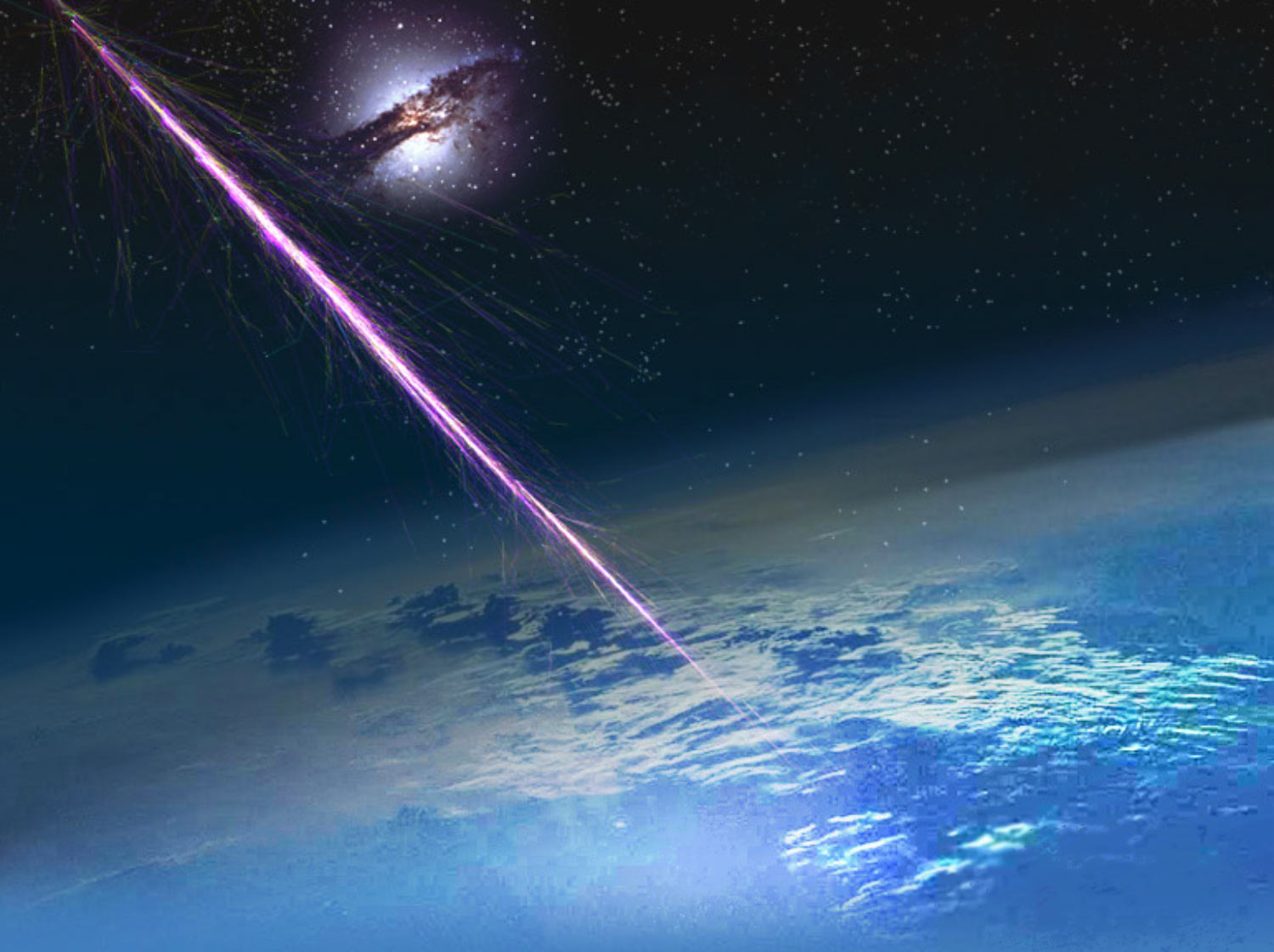 Dr. Athina Meli studies the mechanisms of the origin and acceleration of high energy cosmic-rays using phenomenology and simulations. She studies the nature of the relativistic astrophysical plasma jets in extragalactic Active Galactic nuclei, by investigating the effects the magnetized relativistic plasma jets have on the acceleration of cosmic-rays. Her interests also lie into the phenomenological role that the cosmic rays plays to the multi-messenger astrophysical aspects, which connect cosmic-rays with gamma-rays, neutrinos and gravitational waves from highly energetic relativistic extragalactic sources.
Dr. Charlotte Wood studies supernova cosmology, type 1a supernova progenitors, as well as other binary white dwarf systems, and brown dwarfs. Her research focuses on trying to resolve the differing values of the Hubble constant, and understanding the progenitor systems and their relative occurrences for type 1a supernovas based on light echoes.
Astrophysics Faculty:
Atmospheric Science and Meteorology
How does burning biomass affect our atmosphere? How do you use basic physics and numerical modeling to understand and predict climate change?
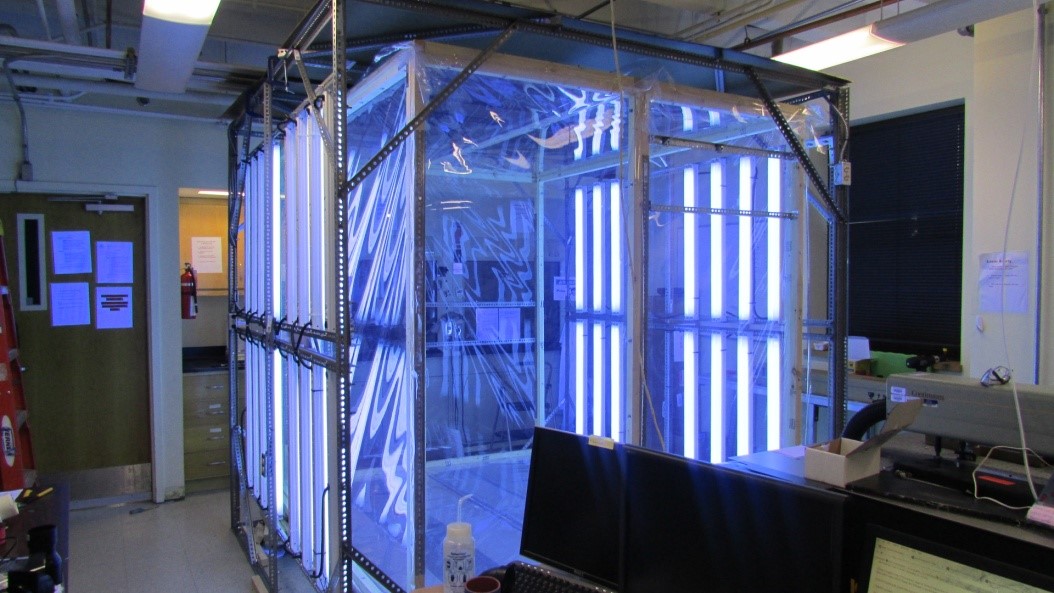 Research in Dr. Bililign's group involves the use of Spectroscopic Techniques and theoretical methods for atmospheric applications: The focus is measuring the optical and physio-chemical properties of Biomass Burning (BB) aerosols and understanding the role of BB Aerosols on climate, regional weather, air quality, and health. Students with backgrounds in physics, chemistry, environmental sciences, and chemical engineering can apply.
Dr. Jing Zhang’s research interests focus on regional climate and weather studies by the means of numerical modeling and data analysis, particularly for the polar regions.
Dr. Yuh-Lang Lin’s research includes Tropical Wave and Cyclone Dynamics, Mountain Meteorology, Wildfire Dynamics and Modeling, Storm Dynamics, Numerical Weather Prediction, Cloud Microphysics Parameterization, Climate Change, Gravity Wave Dynamics, and Moist Convection.
Atmospheric Science and Meteorology Faculty:
Biological Physics
How does the human body work? What is the fundamental physics at work within us?
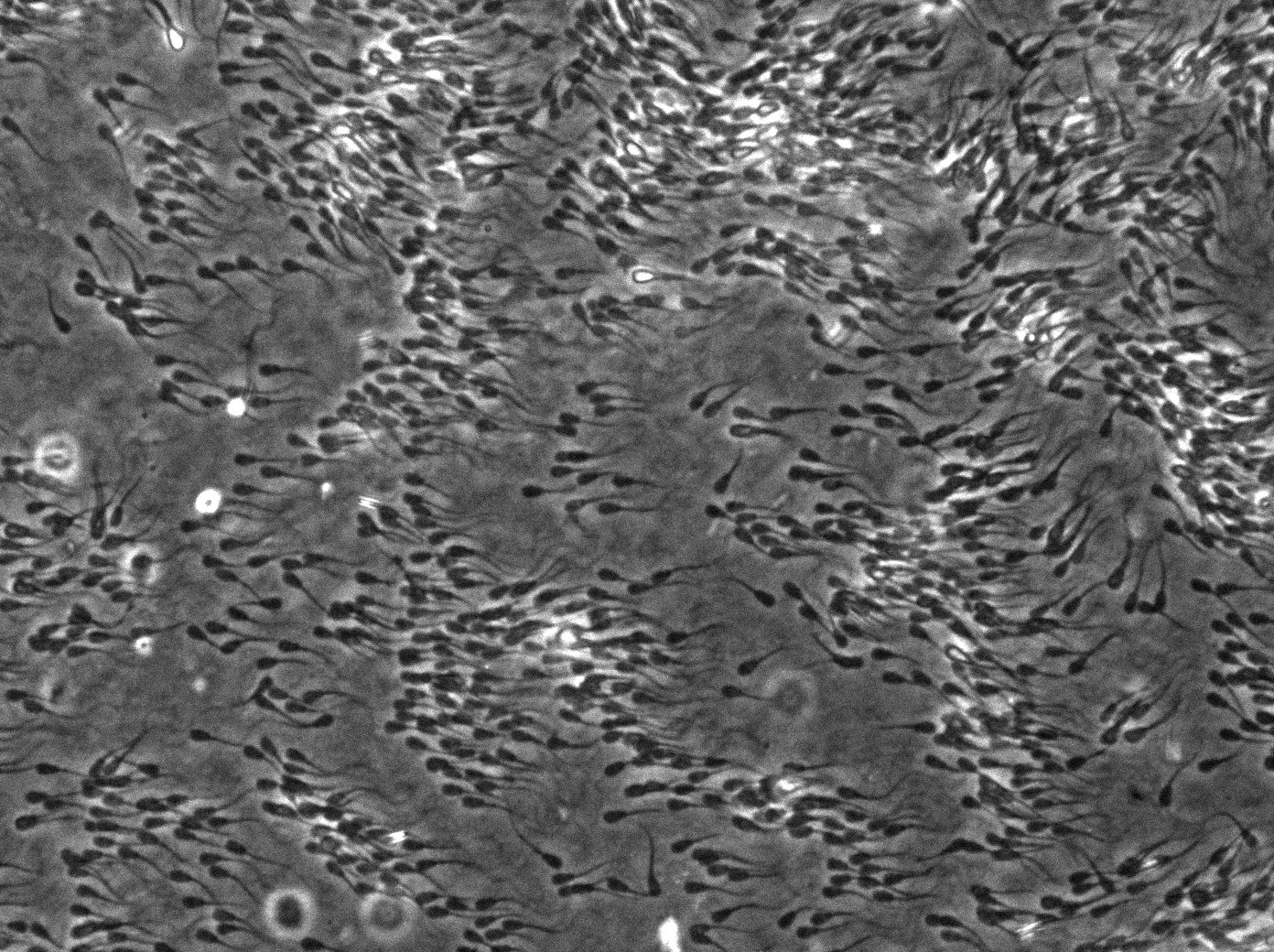 Dr. Tung is using microfabricated devices to experimentally study how sperm interact with a complicated physical environment and using many-body physics (such as thermodynamics) to understand the collective dynamics and propulsion of active matter systems.
Biological Physics Faculty:
Nuclear Physics
What is the radius of the proton, really?
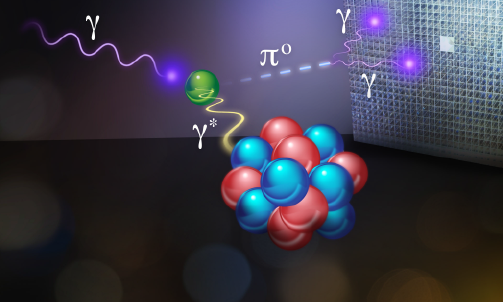 This is a burning question in physics today as two different measurement yield two different results!
Dr. Gasparian is involved in large collaborative efforts, including Duke University, the University of Virginia, and Jefferson Laboratory, to design and perform novel experiments to address problems such as the proton charge radius in physics.
Dr Lesher's research involves studying the vibration of nuclei using a combination of accelerated beams and detector arrays at research laboratories around the world. Her group collaborates with the University of Notre Dame Institute for Structure and Nuclear Astrophysics (ISNAP), to build a detector array, called fIREBAll. This detector will measure conversion electrons in coincidence with gamma rays at ISNAP on specific nuclides.
Nuclear Physics Faculty:
Condensed Matter/Materials Physics
What are the physical properties of novel materials and how can they enable new quantum technologies?
We conduct a multi-disciplinary research effort to understand the physical properties of amorphous, ordered, and nanostructured solids. Materials being investigated include metals, insulators, semiconductors and amorphous solids, exhibiting phenomena such as phase transitions, localization, electronic, and magnetic systems.This research is connected to activities on campus, at other universities, and at national labs to develop new battery and energy storage technologies, and investigate quantum systems.
Condensed Matter/Materials Physics Faculty:
Publications
- Andualem Ayele, Andualem Mekonnen, Eyale Bayable, Marc N. Fiddler, George Stone, Solomon Bililign ‘Knowledge, Perceptions, and Practices of Traffic Police Officers towards Air Pollution in Addis Ababa, Ethiopia: An Exploratory Study’ Int. J. Environ. Res. Public Health 2026, 23(1), 60; https://doi.org/10.3390/ijerph23010060
- Janica Gordon, Kelsey R. Bilsback, Marc N. Fiddler, Gizaw Mengistu Tsedu Jeffrey R. Pierce, Solomon Bililign, 2026, “Impact of residential combustion on black carbon levels in southern Africa: Field measurements and GEOS-Chem simulations” Atmospheric Pollution Research, 17(1), 2026 https://www.sciencedirect.com/science/article/abs/pii/S1309104225003095
- Marc N. Fiddler, Vaios Moschos, Megan M. McRee, Abu Sayeed Md Shawon, Kyle Gorkowski, James E. Lee, Nevil A. Franco, Katherine B. Benedict, Samir Kattel, Chelia Thompson, Manvendra K. Dubey, Solomon Bililign. “Findings of the African Combustion A Collaborative Intercomparison Analysis (ACACIA) Pilot Project to Understand the Optical Properties of Biomass Burning Smoke” Atmospheric Measurement Techniques,19 (1) 307-321, 2026 https://amt.copernicus.org/articles/19/307/2026/
- Cade M. Christensen, Megan M. McRee, Marc N. Fiddler, Solomon Bililign, Barbara J. Turpin, Jason D. Surratt, “Chemical Characterization of Primary Water-Soluble Organic Gas Emissions from African Biomass Burning” Environmental Science and Technology-Air, ACS EST Air2025, 2, 11, 2577–2587 https://pubs.acs.org/doi/10.1021/acsestair.5c0022
- Tommaso Isolabella, Marco Brunoldi, Federico Mazzei, Franco Parodi, Paolo Prati, Virginia Vernocchi, Vera Bernardoni, Gianluigi Valli, Roberta Vecchi, Paola Formenti, Clarissa Baldo, Mathieu Cazaunau, Vaios Moschos, Solomon Bililign, Marc N. Fiddler, Dario Massabò; “The Broadband Light Analyzer of Complex Aerosol: characterization and first applications,” Atmospheric Environment, 2025, (1) 358, pp. 12314 https://doi.org/10.1016/j.atmosenv.2025.121341
2024
- Shobitha Unnikrishnan, Robert L Scott, Emmanuel Ogundele, Mohammad A Azad, Kenta Ishimoto, Susan S. Suarez, Chih Kuan Tung. (2024). Hybrid motility mechanism of sperm at viscoelastic fluid-solid interface. Scientific Reports, 14, 21841. https://www.nature.com/articles/s41598-024-72816-y
- Marc N. Fiddler, Chelia Thompson, Rudra P. Pokhrel, Francesca Majluf, Manjula Canagaratna, Edward C. Fortner, Conner Daube, Joseph R. Roscioli, Tara I. Yacovitch, Scott C. Herndon, Solomon Bililign. (2024). Emission factors from wildfires in the Western US: An investigation of burning state, ground versus air, and diurnal dependencies during the FIREX-AQ 2019 campaign. Journal of Geophysical Research: Atmospheres, 129, e2022JD038460. https://doi.org/10.1029/2022JD038460
-
Vaios Moschos, Cade Christensen, Megan Mouton, Marc N. Fiddler, Tommaso Isolabella, Federico Mazzei, Dario Massabò, Barbara J. Turpin, Solomon Bililign, and Jason D. Surratt. Quantifying the Light-Absorption Properties and Molecular Composition of Brown Carbon Aerosol from Sub-Saharan African Biomass Combustion. Environmental Science & Technology. DOI:10.1021/acs.est.3c09378
-
Solomon Bililign, Steven S. Brown, Daniel M. Westervelt, Rajesh Kumar, Wenfu Tang, Frank Flocke, William Vizuete, Kassahun Ture, Francis D. Pope, Belay Demoz, Akua Asa- Awuku, Pieternel F. Levelt, Egide Kalisa, Alex Ndyabakira, East African Megacity Air Quality (EAMAQ): (2024) Rationale and Framework for a Measurement and Modeling Program, Bulletin of American Meteorological Society, In Press https://doi.org/10.1175/BAMS-D-23-0098.1
-
Abhishek Anand, N’Datchoh Evelyne Touré, Julien Bahino, Sylvain Gnamien, Allison Felix Hughes, Raphael E Arku, Victoria Owusu Tawiah, Araya Asfaw, Tesfaye Mamo, Sina Hasheminassab, Solomon Bililign, Vaios Moschos, Daniel M. Westervelt Albert A. Presto* (2024) Low-Cost Hourly Ambient Black Carbon Measurements at Multiple Cities in Africa, Environ. Sci. Technol. 2024, 58, 28, 12575–12584, https://doi.org/10.1021/acs.est.4c02297
- Megan McRea, Vaios Moschos, Marc N. Fiddler, Dario Massabò, Jason D. Surratt, and Solomon Bililign, "Influence of relative humidity and aging on the optical properties of organic aerosols from burning African biomass fuels" Aerosol Science and Technology, 2024, 23(1) https://doi.org/10.1080/02786826.2024.2412652
- Markie’Sha James, Vaios Moschos, Megan M. McRae, Marc N. Fiddler, Barbara J. Turpin, Jason D. Surratt, and Solomon Bililign, “Real-time chemical characterization of primary and aged biomass burning aerosols derived from Sub-Saharan African biomass fuels in smoldering fires”. Environmental Sciences-Atmosphere 2024, https://doi.org/10.1039/D4EA00110A
- Katherine S. Hopstock, Qiaorong Xie, Michael A. Alvarado, Vaios Moschos,Solomon Bililign, Jason D. Surratt, Alexander Laskin, Sergey A. Nizkorodov, 2024 “Molecular characterization and photoreactivity of organic aerosols from urban material combustion at the wildland-urban interface” - Environmental Science and Technology-Air, ACS EST Air 2024, 1, 11, 1495–1506 https://doi.org/10.1021/acsestair.4c00215
- Olivia G. Norman, Colette L. Heald, Pedro Campuzano-Jost, Hugh Coe, Marc N. Fiddler, Jaime R. Green, Solomon Bililign, Jose L. Jimenez, Katharina Kaiser, Jin Liao, Ann M. Middlebrook, Benjamin A. Nault, John B. Nowak, Johannes Schneider, and André Welti, “Exploring the processes controlling secondary inorganic aerosol: Evaluating the global GEOS-Chem simulation using a suite of aircraft campaigns” Atmospheric Chemistry and Physics 2024, https://doi.org/10.5194/egusphere-2024-2296
- Adrienne Lambert, Cade Christensen, Megan Mouton, Vaios Moschos, Markiesha James, Janica Gordon, Haley M. Royer, Marc Fiddler, Barbara J. Turpin, Solomon Bililign, and Jason D. Surratt, “Chemical Characterization of Organic Aerosol Tracers Derived from Burning Biomass Indigenous to Sub-Saharan Africa: Fresh Emissions Versus Photochemical Aging” Environmental Sciences and Technology-Air, 2024, 1, 11, 1463–1482- https://doi.org/10.1021/acsestair.4c00206
2023
-
, , , , , , & The Effects of Trash, Residential Biofuel, and Open Biomass Burning Emissions on Local and Transported PM2.5 and its Attributed Mortality in Africa. GeoHealth. 2023; 7, e2022GH000673. https://doi.org/10.1029/2022GH000673
-
Honablew T, Fiddler MN, Pokhrel RP, Bililign S. Fractal Dimensions of Biomass Burning Aerosols from TEM Images Using the Box-Grid and Nested Squares Methods. Atmosphere. 2023; 14(2):221. https://doi.org/10.3390/atmos14020221.
- Jing Zhang, Xiangdong Zhang, John E Walsh, Erika Roesler and Benjamin Hillman. Concurrence of blowing snow and polynya enhances arctic surface–atmosphere interaction: a modeling study with an extreme wind event in 2018. Environmental Research: Climate, 2 011004; 2023. https://doi.org/10.1088/2752-5295/acb9b1.
- Megan Mouton, Kotiba A. Malek, Markie’Sha James, Rudra Pokhrel, Marc N. Fiddler, Akua A. Asa-Awuku, and Solomon Bililign, (2023) The Hygroscopic Properties of Biomass Burning Aerosol from Biomass Fuels-Eucalyptus and Dung under Different Combustion Conditions. Aerosol Science and technology; 2023. https://doi.org/10.1080/02786826.2023.2198587
- Zhang, X., H. Tang, J. Zhang, J. Walsh, E. Roesler, B. Hillman, T. Ballinger, & W. Weijer, 2023, Arctic Cyclones Have Become More Intense and Longer-lived Over the Past Seven Decades, Nature Communications Earth & Environment, https://doi.org/10.1038/s43247-023-01003-0
- Ising, J., M. L. Kaplan, and Y.-L. Lin. Effects of density current, diurnal heating, and local terrain on the mesoscale environment conducive to the Yarnell Hill Fire. Atmosphere, 2022, 13(2), 215; https://doi.org/10.3390/atmos13020215
- V Singh, J Burge, D Brainard. Equivalent Noise Characterization of Human Lightness Constancy. Journal of Vision April 2022, Vol.22, 2. https://doi.org/10.1167/jov.22.5.2
- J Shuman, ..., S Bililign, et al. Reimagine fire science for the anthropocene. PNAS Nexus August 2022. https://doi.org/10.1093/pnasnexus/pgac115
- Luo, L., and J. Zhang. Blowing snow contributes to positive surface energy budget and negative surface mass balance during a melting season of Larsen C Ice Shelf, Antarctic Peninsula. Geophysical Research Letters, 2022, https://doi.org/10.1029/2022GL098864
- Shiva Phuyal, Susan Suarez, Chih Kuan Tung. Biological benefits of collective swimming of sperm in a viscoelastic fluid. Front. Cell Dev. Biol.10, pp. 921623. (2022).
- Christina Isaxon, Asmamaw Abera, Araya Asfaw, Solomon Bililign, Axel Eriksson, Ebba Malmqvist, Kedir Roba. A call for action: Air Pollution, a serious health and economic hazard suffocating Africa. Clean Air Journal, 32(2). https://doi.org/10.17159/caj/2022/32/2.15116.
