

HR Project Management and Process Improvement
HR Project Management and Process Improvement within the Division of Human Resources is a service that was created to lead and support DHR projects at N.C. A&T State University. This service helps ensure that the DHR projects are completed efficiently and effectively, and that processes within the Division of Human Resources are continually improved to drive better performance and outcomes.
Ultimately, this service will play a crucial role in driving continuous improvement within the division, fostering a culture of innovation, collaboration and efficiency.- A project is temporary in that it has a defined beginning and end in time and therefore defined scope and resources.
- A project is unique in that it is not a routine operation, but a specific set of operations designed to accomplish a singular goal.
- outcome directly impacts other HR projects, policies and/or processes
- initiated due to a policy/legislative change
- includes consultation, collaboration and resources of other business offices external to HR
Key Resources
Project Plan Framework
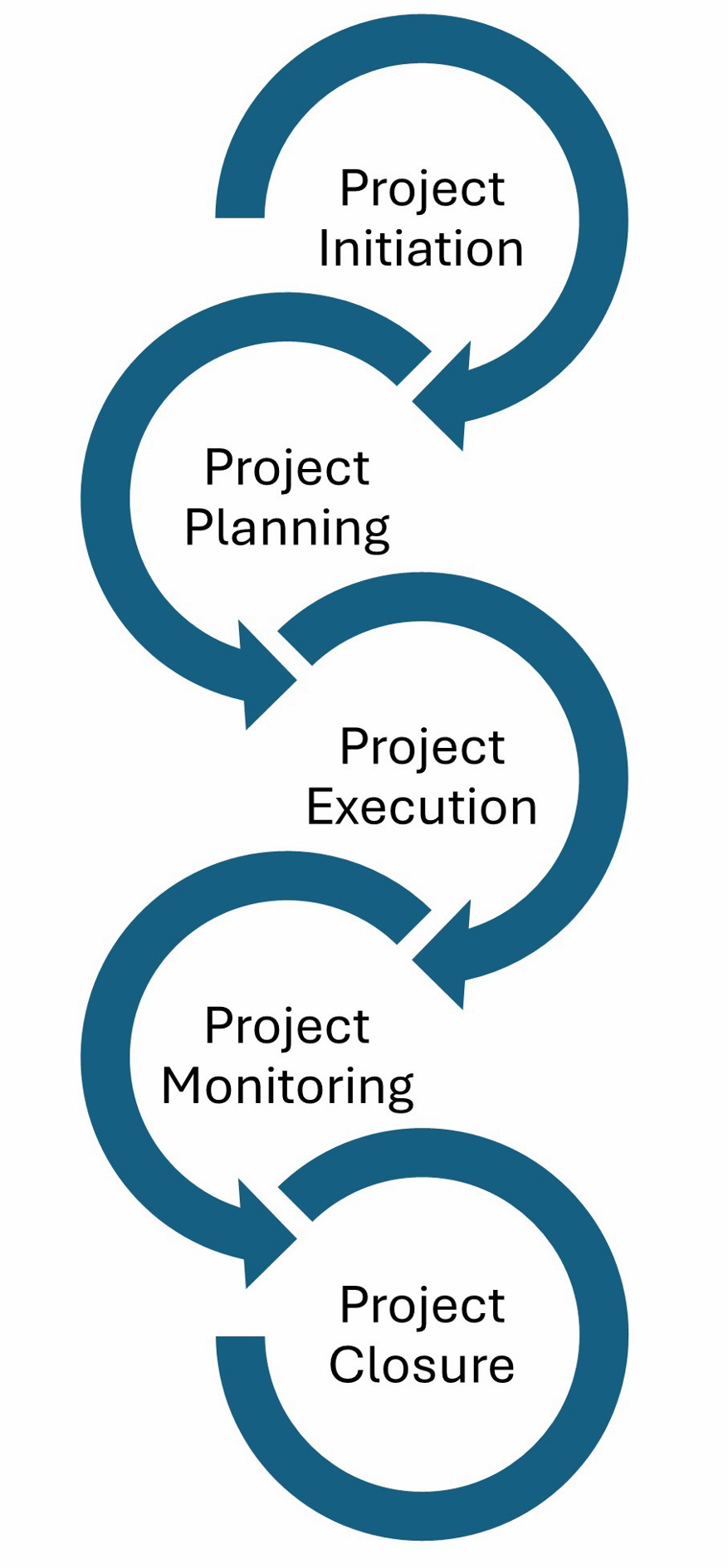
- Defines project purpose, goals and objectives.
- Outlines project plan and timeline.
- Identifies potential risks and roadblocks.
- Identify third-party vendors if needed.
- Clarifies project scope.
- Outlines work breakdown structures.
- Identifies resources needed to execute project.
- Execute WBS
- System configuration, validation and implementation
- Engage stakeholders
- Training
- Tracks performance.
- Monitors quality of deliverables.
- Reflects on project lifecycle, identify wins and losses.
- Deliver final deliverables and outcomes.
Additional Resources
- Timeline with Reasonable Checkpoints
- Communication Plan
- Campus Stakeholder Notice
- Website Updates
- Training Plan – Include internal and external customers
- FAQ’s and Supporting Docs
- Pilot / BETA Testing
- Risk Management
- Sustainability
- Legal & Compliance Review
| Work Request | Project | Large Project | |
| Effort | Low Effort - less than 100 hours | Medium Effort - between 100-300 hours | High Effort - greater than 300 hours |
| IT Coordination | Little or no IT Coordination: Work may not involve IT services or be limited | Requires some IT coordination and resources | Requires heavy IT coordination and resources |
| Duration | Short timeframe, 0-3 months | Medium timeframe, 3-6 months | Long timeframe, more than 6 months |
| Campus Impact | Low: Singe functional area | Medium: Impacts two functional areas | Campus Wide: Project impacts multiple departments or groups on campus) extensive campus readiness and communication will be required) |
| Complexity | Low, Easily understood problem & solution, easily achievable | Moderate business/technical complexity, problem is difficult to understand or solution is unclear or difficult to achieve | Very High business/technical complexity, problem and solution are unrefined AND difficult to achieve |
| Vendor Involvement | No vendor involvement | Some vendor involvement: Project assessment may involve contracting with an outside vendor. | High vendor involvement: Project implementation involves contracting with a new vendor. |
| Timeframe | Schedule is flexible | Schedule can undergo minor variations but deadlines are firm | Deadline is fixed and cannot be changed, schedule has no room for flexibility |
Disclaimer
The Human Resources Project Management Matrix at North Carolina A&T State University is designed to provide general guidance in categorizing project efforts across three defined levels: Level 1 – Work Request, Level 2 – Project, and Level 3 – Large Project. Each level is differentiated by factors such as required effort, Information Technology (IT) coordination, expected duration, campus impact, complexity, vendor involvement, and overall timeframe.
Please note that the project duration and timelines outlined in this matrix are estimates and are subject to change based on unforeseen circumstances, evolving campus needs, stakeholder availability, or external factors outside of the project team’s control. Final project classification and execution plans will be determined in consultation with relevant departments, including Human Resources and Information Technology Services, to ensure alignment with institutional priorities and resource availability.
This matrix should be used as a planning tool only and does not constitute a binding project agreement or timeline.
Questions? Contact project management staff.
Natalie Jacobs
DHR Project Manager
nljacobs@ncat.edu
336.285.3778
