

APPLIED PSYCHOLOGY, Ph.D.
Degree Offered: Ph.D.
Program Overview:
The Applied Psychology Ph.D. program is designed to train students to conduct innovative, cutting-edge research to address real-world issues and improve the lives of others. The program offers two concentrations (1) cognitive-behavioral neuroscience and (2) social-community psychology.*
Cognitive-Behavioral Neuroscience
Cognitive-Behavioral Neuroscience focuses on understanding the neural correlates and relationships between biology, behavior, and cognition using animal and human models. Students who select the Cognitive-Behavioral Neuroscience (CBN) concentration will receive training in research and theory along with acquiring a wide range of statistical and methodological skills necessary to conduct basic and applied research.
Social-Community Psychology
Health behavior and other social issues are significant global social problems and an area where advanced psychological knowledge informs policy and the development of interventions. Students who select the Social-Community Psychology (SCP) concentration will receive training in conducting research that advances and applies scientific knowledge to address pressing societal issues.
Program Outcomes:
The Program will prepare students to:
- Apply psychological knowledge to address real-world societal problems.
- Enter careers in various areas, including academic instruction, research (clinical and community settings), and government and non-profit organizations.
- Address critical social issues to improve health and well-being; and utilizing data analytics to drive problem-solving.
- Independently conduct psychological research, engage in scholarly activities and effectively communicate research findings.
- Apply ethical standards in conducting and evaluating psychological science.
Scholarly Engagement:
Faculty members engage in a variety of research programs, spanning the areas of: basic sciences, behavioral sciences, community-based interventions, and clinical/translational research. Faculty are supported by external grants from funding agencies such as the National Institutes of Health (NIH), the National Science Foundation (NSF) and other research organizations. Additionally, the Hairston College of Health and Human Sciences (HCHHS) is home to the Center of Excellence for Integrative Health Disparities and Equity Research (CIHDER).
Funding and Financial Aid:
Admitted students may be eligible for funding through teaching or research assistantships, fellowships, or scholarships. Be sure to indicate interest in funding opportunities within your application.
*This is not a clinical program and does not prepare for clinical licensure.
Application Guidelines: Ph.D. in Applied Psychology
- Complete the official university application form via the graduate admissions portal.
- Application fee is $60.
- Indicate the preferred track (Social and Community Psychology or Cognitive-Behavioral Neuroscience).
- A 2-3 page essay outlining:
- Your research interests and how they align with faculty expertise (who would you like to be your dissertation advisor?).
- Relevant academic and professional experiences.
- Career goals and how the Ph.D. will help achieve them.
- Why you are interested in this program and specify whether you are interested in the Cognitive Behavioral Neuroscience track OR the Social Community Psychology track.
- Include details on academic background, research experience, publications (if any), work experience, and professional affiliations.
- Three (3) letters from academic or professional references who can speak to your research potential, academic abilities, and suitability for doctoral study.
- Official transcripts from all post-secondary institutions attended.
- A bachelor’s degree in psychology OR
- A bachelor’s degree in a related discipline with 12 credit hours in psychology that includes at least 1 introductory statistics course and 1 research methods course OR
- 12 post-baccalaureate graduate credits in psychology.
- 3.0 GPA or higher from your most recent institution.
- Select applicants may be invited for a virtual or in-person interview with faculty members.
- As part of the interview, applicants will provide a writing sample.
Director of the Graduate Programs: Dr. Kalynda C. Smith
Email: psychgraduate@ncat.edu
Administrative Support Specialist: Ms. Monica Dudley
Email: psychgraduate@ncat.edu
Graduate Office Phone: (336) 285-2278
Main Office Phone: (336) 285-2267

| Assistant Professor | |
| tabrothers@ncat.edu | |
| 336-285-2267 | |
|
Dr. Brothers is interested in the role of prediction in language comprehension. He is accepting students for Fall 2027. Click here to view Dr. Brothers profile. |

| Associate Professor | |
| cmgermain@ncat.edu | |
| 336-285-2276 | |
|
Dr. Germain's research focuses on preserving functional health and wellbeing in older adults. She is accepting students for Fall 2027. Click here to view Dr. Germain’s profile. |
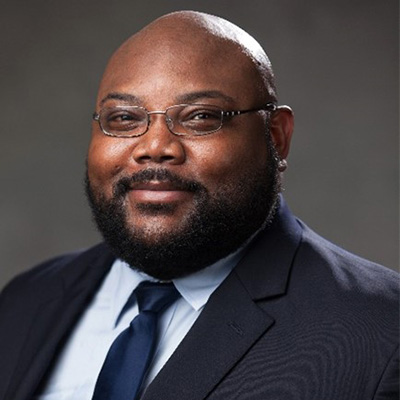
| Assistant Professor | |
| lkhill@ncat.edu | |
|
Dr. Hill's research is on the interaction of biological and psychosocial factors on health. He is accepting students for Fall 2027. Click here to view Dr. Hills’s profile. |

| Assistant Professor | |
| hjavidi@ncat.edu | |
| Dr. Javidi's research focuses on developing, implementing, and evaluating effective health intervention strategies to improve adolescents' sex education, healthy sexual behaviors, and overall wellbeing. She is accepting students for Fall 2027. Click here to view Dr. Javidi’s profile. |

| Assistant Professor | |
| zfazlikhalaf@ncat.edu | |
| Dr. Khalaf's research interests include sexual and reproductive health, the mental health of minority groups, and women in the academy. She is accepting students for Fall 2028. Click here to view Dr. Khalaf’s profile. |

| Associate Professor | |
| amdevinc@ncat.edu | |
| Dr. Maldonado-Devincci's research is in understanding the underlying molecular and neurobiological mechanisms that mediate alcohol-induced changes in brain function and behavior. She is accepting students for Fall 2028. Click here to view Dr. Maldonado-Devincci’s profile. |

| Assistant Professor | |
| rsrastogi@ncat.edu | |
| Dr. Rastogi's uses quantitative, qualitative, and community-engaged methods to investigate factors contributing to racially marginalized youths’ mental health, resilience, and resistance against structural oppression. She is accepting students for Fall 2028. Click here to view Dr. Rastogi’s profile. |

| Associate Professor | |
| grobinso@ncat.edu | |
| Dr. Robinson's research interest is in the area of Human Brain Electrophysiology. He is accepting students for Fall 2027.
Click here to view Dr. Robinson’s profile. |

| Associate Professor | |
| kcsmith7@ncat.edu | |
| 336-285-2283 | |
| Dr. Smith's research interests are in the STEM Education of Black and Brown students and social determinants of health for African American women. She is accepting students for Fall 2028.
Click here to view Dr. Smith’s profile. |
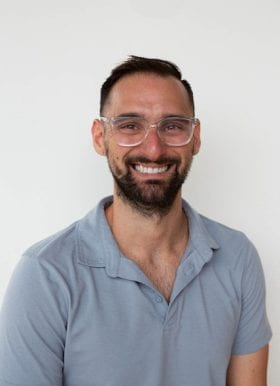
| Assistant Professor | |
| mswelhaf@ncat.edu | |
| Dr. Welhaf's research focuses on iindividual differences in attention control andmind wandering. He is accepting students for Fall 2027. Click here to view Dr. Welhaf’s profile. |
| Associate Professor | |
| yyehualashet@ncat.edu | |
| Dr. Wondie's research focuses on psychological stress/distress and PTSD and quality of life in patients with chronic illness, and professional development and quality ofeducation. He is accepting students for Fall 2027. Click here to view Dr. Wondie’s profile. |
